The Physical Demands of Equestrian and Polo Riding (And Why Riding Alone Isn't Enough)
If you ride jumpers, play polo, or compete in dressage, you already know riding is a workout. Your legs burn after a long lesson, your core gets tired holding position, and your grip fades late in a match. But here’s something a lot of riders don’t realize: riding your horse, even a lot of it, doesn’t build all the strength and control your body needs to ride well and stay injury-free.
This post breaks down what your body actually has to do in the saddle, how those demands shift depending on your discipline, and why a strength and conditioning program built around riding can close the gaps that riding itself can’t.
Riding Is a Full-Body Sport, Not “Sitting on a Horse”
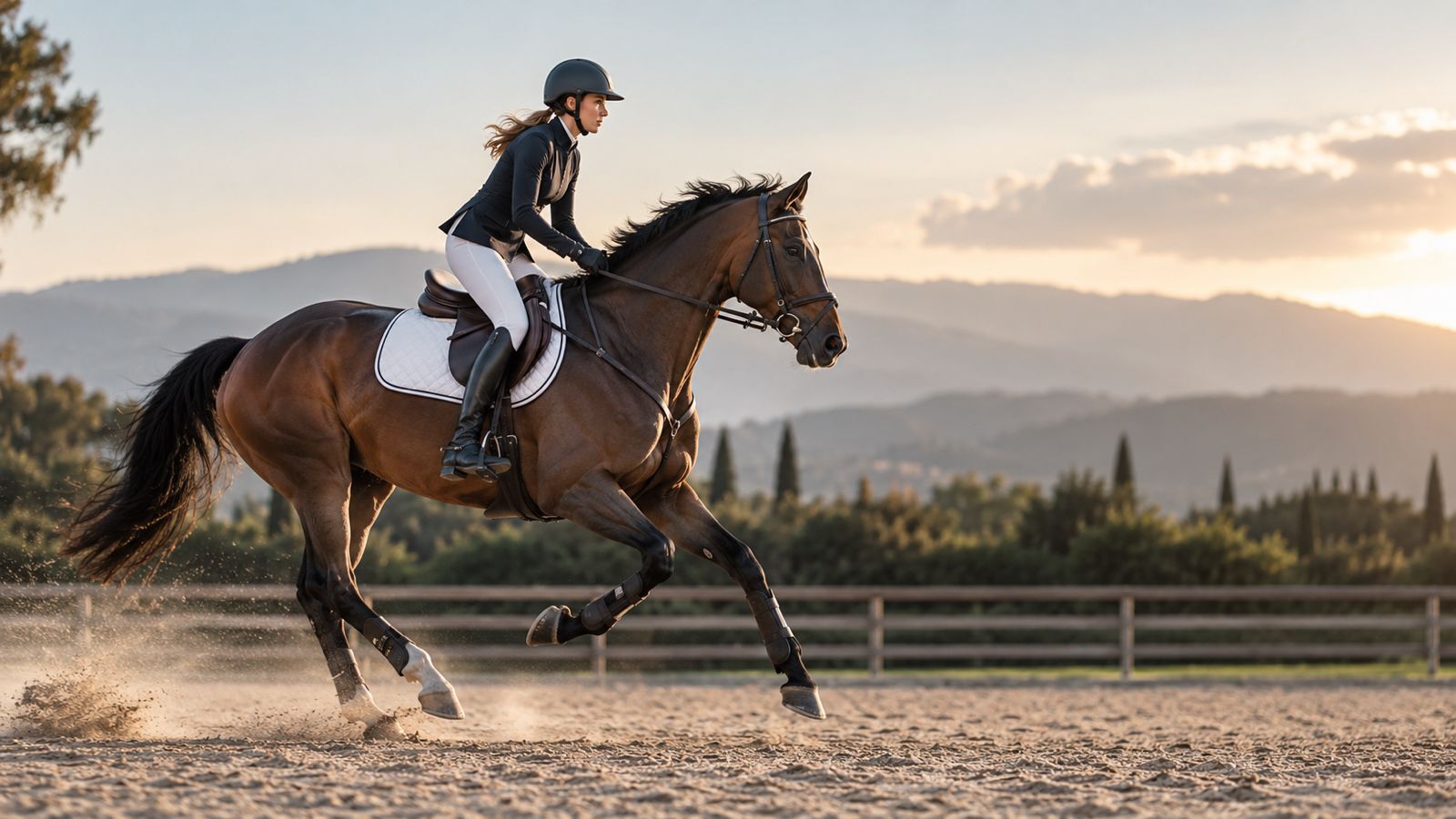
Watching someone ride, it might look like the horse is doing most of the work. It isn’t. Your body is constantly making tiny corrections, resisting movement, and producing force, often without you even noticing you’re doing it.
A few things your body has to manage every ride:
- Keeping your trunk (your core and lower back) stable while the horse moves underneath you
- Staying relaxed through your arms and legs while still being strong enough to hold your position
- Reacting instantly to changes in speed, direction, and terrain
- Gripping with your legs or hands for long stretches without letting your muscles fully rest
None of this is passive. It’s demanding, repetitive, low-level work that adds up over the course of a ride, a lesson, or a match.
The Physical Themes Every Rider Deals With
Whether you’re jumping a course, playing a chukker of polo, or riding a dressage test, a few core physical demands show up across all disciplines.
Core Stability, Especially When You’re Tired
Your trunk (chest, low back, and pelvis) needs to stay steady while your horse moves in every direction beneath you. That means resisting unwanted bending, twisting, and side-to-side sway, over and over, for the length of your ride.
Early in a ride, this feels manageable. But as fatigue sets in, riders often start compensating. You might grip harder with your legs, tense up your shoulders, or let your position break down little by little. That’s usually a sign your core doesn’t have the endurance to keep doing its job.
A Stable Trunk With Relaxed Arms and Legs
Good riding position isn’t about being stiff. It’s about having a stable center (your trunk and pelvis) while your arms and legs stay relatively loose and responsive.
This matters more than most riders think. Horses are sensitive to tension. When a rider tightens up through the hips, legs, or hands, the horse can feel it, and it can change the horse’s gait or responsiveness. So the goal isn’t maximum strength everywhere. It’s building enough stability in the right places so you can stay relaxed in the others.
Hip Strength and Mobility
Your hips are doing constant work: absorbing the horse’s movement, helping you maintain your seat, and controlling your leg position. Riders need strength and control through a wide range of hip positions, not just the narrow range they sit in most often.
Weak or stiff hips often show up as excessive gripping, which brings us to the next point.
Hip Strength and Mobility
Weak or stiff hips often show up as excessive gripping, which brings us to the next point.
Inner Thigh (Adductor) Endurance
The muscles on the inside of your thighs, called your adductors, play a big role in keeping you secure on the horse. This isn’t about how much force they can produce in a single squeeze. It’s about how long they can keep working without fatiguing.
As a ride goes on and those muscles tire, riders often lose position bit by bit. Building endurance here, not just strength, is what helps you hold your seat through the last few minutes of a hard ride.
Rotational Strength and Control (Especially in Polo)
If you play polo, you know this one well. Hitting the ball means rotating through your trunk with real force, all while staying balanced and keeping your lower body in control. Generating rotational power without losing your position in the saddle takes a specific kind of trained strength that riding alone doesn’t fully build.
Balance and Body Awareness
Your body is constantly adjusting to what the horse is doing: changes in speed, direction, footing, and rhythm. This skill, often called proprioception (basically, your body’s sense of where it is in space), gets harder to maintain as you fatigue. A tired rider reacts more slowly and less precisely, which is where balance issues and compensations start to creep in.
Grip and Upper Body Endurance
Holding the reins with the right amount of pressure, not too much, not too little, for an entire ride takes real endurance in your hands, forearms, and shoulders. This becomes especially important for riders who spend long hours in the saddle, where fatigue in the upper body can affect rein contact and communication with the horse.
How the Demands Shift by Discipline
While those themes apply across the board, each discipline asks something a little different of your body.
Jumpers
Jumping requires short bursts of explosive effort and quick changes in body position. Your lower body needs strength and stability to handle the takeoff and landing of each jump, while your trunk has to stay controlled as your position shifts forward and back over the horse.
Polo
Polo combines high-speed riding with constant acceleration and deceleration, plus the rotational demands of hitting the ball. Riders also deal with unilateral loading, meaning force isn’t distributed evenly between both sides of the body, and asymmetrical positions, like reaching outside your base of support to make a play. All of this demands a body that can produce force quickly, absorb impact, and stay controlled while moving in less predictable patterns.
Dressage
Dressage looks smooth and controlled from the outside, but that control takes serious physical work. It requires a high level of postural control, isometric endurance (holding a muscle contraction without much movement), and the ability to make small, precise adjustments while holding a consistent position for long stretches of time.
So Why Isn’t Riding Enough on Its Own?
This is the part that surprises a lot of riders. Time in the saddle builds your skill and feel for the sport, no substitute for that. But from a pure physical-development standpoint, riding tends to be fairly repetitive. It trains your body in a fairly narrow way, which means certain physical qualities just don’t get built through riding alone.
Common gaps we see in riders include:
- Maximal strength
- Rate of force development (how quickly you can produce force, not just how much)
- Trunk strength and endurance
- Single-leg strength and stability
- Rotational strength
- Hip mobility
- Aerobic capacity (your endurance engine)
- Anaerobic capacity (your ability to sustain short, intense efforts)
- Recovery capacity between rides, matches, or events
This is exactly where strength and conditioning comes in. The goal isn’t to make you strong for the sake of being strong. It’s to build the specific physical qualities that let you hold your position longer, absorb the horse’s movement more efficiently, produce force when you need it, resist fatigue late in a ride or match, and stay relaxed and coordinated even as the demands of your sport increase. Strength training doesn’t replace the skill of riding. It fills in the physical gaps that riding alone leaves behind, so your body can actually keep up with what your sport is asking of it.
Ready to Ride Stronger?
If you’ve noticed your position breaking down late in a ride, you’re dealing with recurring hip, back, or shoulder discomfort, or you’re recovering from an injury and want to get back in the saddle the right way, a personalized evaluation can help. We can look at how your strength, mobility, and movement patterns match up with the demands of your specific discipline and build a plan to close those gaps. Reach out to our clinic to schedule an evaluation and start training for the sport you actually do.