
Training Through Pain as a CrossFit Athlete?
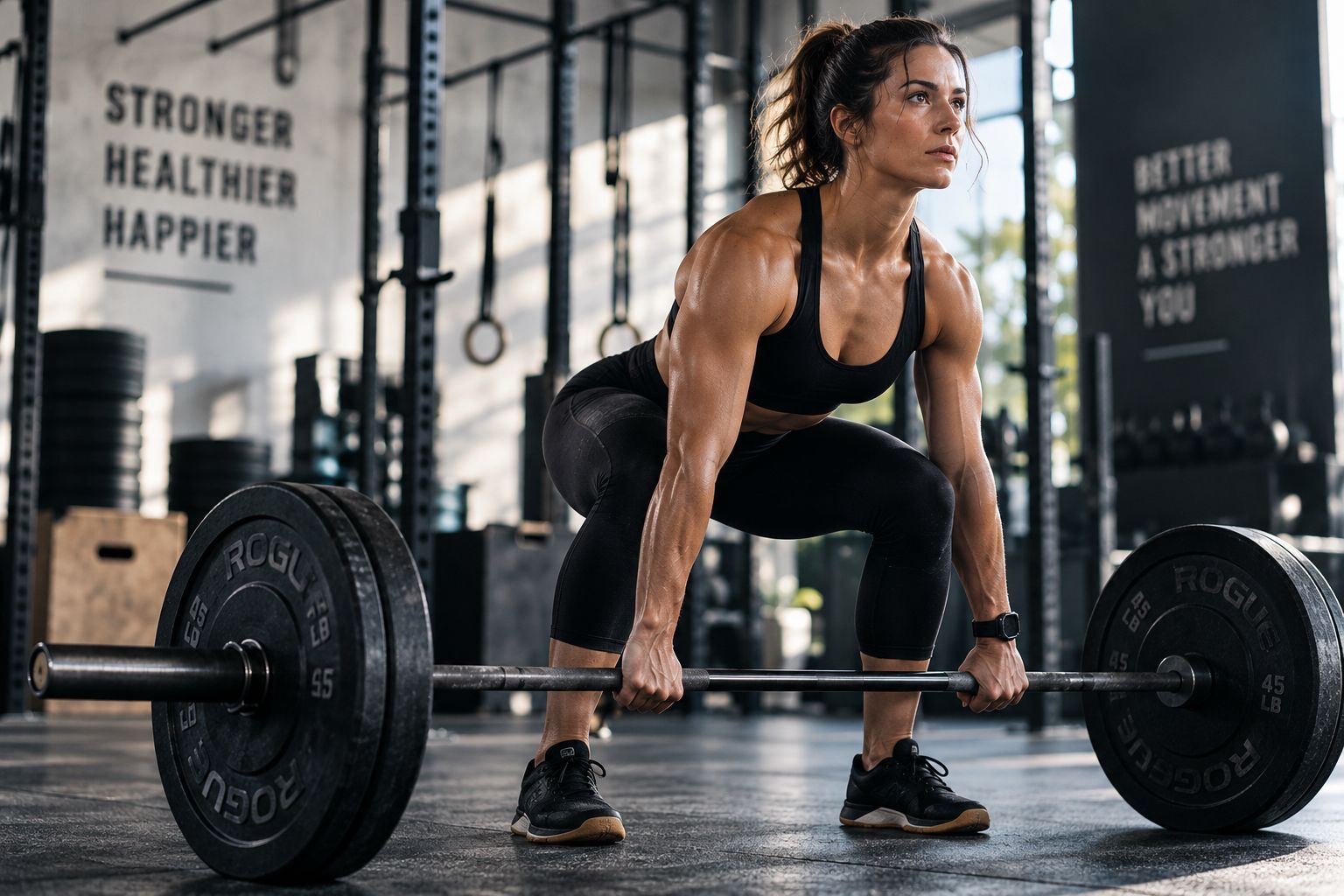
If you’ve ever gritted your teeth through a heavy deadlift or a long set of handstand pushups because you didn’t want to scale, you’re not alone and you’re also not doing yourself any favors. Pushing through pain isn’t the answer. But neither is stopping training altogether every time something feels off. There’s a smarter middle ground, and it starts with knowing exactly what to adjust so you can keep squatting, deadlifting, and moving without constantly flaring up nagging injuries.
The Five Things You Can Actually Change
Almost every movement in your WOD breaks down into five adjustable variables:
- Load— how much weight you’re moving
- Reps— how many times you do it
- Range of motion (ROM)— how far your joint moves during the exercise
- Tempo— how fast or controlled the movement is
- Exercise selection— the movement itself
When something starts bothering you, the fix usually isn’t to abandon the movement completely. It’s figuring out which one of these five variables is actually driving your symptoms, and adjusting just that one.
Figure Out When It Hurts to Know What to Change
The timing of your pain tells you a lot about what’s going on:
Pain only shows up at heavier weights. If your back only bothers you once you’re loading anything past 315 pounds on the deadlift, that’s usually a load tolerance issue. Your body can handle the movement, just not at that weight yet. Try backing the load down.
Pain shows up late in high-rep sets. If your shoulder is fine for the first 40 handstand pushups but starts barking around rep 50, that’s more likely a fatigue or endurance issue. Here, the fix is usually trimming your reps or total volume for that movement, not cutting weight.
Pain shows up at a certain depth or position. If squatting only hurts once you pass a certain depth, you may be running into a mobility limitation. In that case, temporarily shortening your range of motion, like squatting to a box, while you work on the mobility behind it can keep you training without aggravating things.
You can’t find a pain-free way to do the movement at all. Sometimes no adjustment to load, reps, or depth gets rid of the pain. When that happens, it may be time to swap the exercise itself. If barbell bench press hurts no matter how you modify it, switching to dumbbell bench press for a while is a solid temporary substitute.
The Goal Isn’t Zero Pain, It’s Tolerable and Trending in the Right Direction
Here’s something that trips a lot of athletes up: the goal of modifying your training isn’t to feel absolutely nothing during every rep. What actually matters is whether your symptoms are tolerable in the moment, and how your body responds over the next several hours and into the next day. A little discomfort that settles down quickly is a very different situation than pain that lingers, worsens, or shows up again the next time you train.
Don’t Change Everything at Once
When something starts hurting, it’s tempting to overhaul the whole movement: cut the weight in half, switch to kettlebells, shorten the range of motion, slow the tempo down, and skip the movement entirely for two weeks, all at the same time. Resist that urge.
If your back hurts deadlifting above 315, you probably don’t need to change five things simultaneously. Pick the one variable that matches when your pain shows up, adjust that, and see how your body responds. Changing everything at once makes it impossible to know what actually helped, and it’s often a bigger disruption to your training than necessary.
Scaling Isn’t Just for Beginners
There’s a common mindset in CrossFit that scaling is something only newer athletes need. In reality, scaling is a tool for managing training stress at any level. Temporarily modifying a movement so you can keep training productively beats repeatedly irritating the same injury trying to prove you can still do the workout as prescribed. The athletes who stay consistent year after year are usually the ones who know when to dial something back, not the ones who never do.
Quick Reference: What to Modify, Based on When It Hurts
| If you notice pain… | Consider modifying… | Example |
|---|---|---|
| Only at heavier weights | Load | Deadlift 275 instead of 315+ |
| Late in high-rep workouts | Volume/fatigue | Reduce HSPU reps per round |
| At the bottom of a squat | Range of motion | Squat to a box temporarily |
| During fast/explosive reps | Tempo/intensity | Controlled reps instead of touch-and-go |
| After several training days | Frequency/recovery | Reduce exposure that week |
| Regardless of load/ROM | Exercise variation | Barbell bench → dumbbell bench |
Modification Keeps You Training. It Doesn’t Fix the Root Cause
It’s worth being clear about what modification is and isn’t doing for you. Adjusting a movement can keep you in the gym and moving forward, but it doesn’t necessarily address why your tolerance changed in the first place. If box squats are the only pain-free way you can squat right now, the long-term goal shouldn’t be to box squat forever. The modification buys you time and keeps you training while you work on whatever’s actually limiting you, whether that’s strength, mobility, movement capacity, or a specific limitation that needs more focused attention.
When It’s Time to Get It Checked Out
Modifying smart solves a lot of problems, but not all of them. It’s time to get evaluated if you’re dealing with:
- Symptoms that keep getting worse despite appropriate modifications
- Significant swelling
- Loss of strength or function in the area
- Symptoms that keep coming back every time you return to normal training
- An injury that just isn’t trending in the right direction, no matter what you adjust
None of these mean your CrossFit days are over. They usually mean it’s time for someone to take a closer look at what’s actually going on so you can address it directly instead of working around it indefinitely.
Ready to Stop Guessing and Get a Real Plan?
If a nagging injury keeps showing up no matter how you modify your training, or you’re not sure which variable is actually the problem, an evaluation can save you a lot of trial and error. We work with CrossFit athletes regularly and can help you figure out what’s driving your symptoms, and build a plan to get you back to training at full capacity, not just a modified version of it. Reach out to schedule an evaluation or give us a call.
This post is for general information only and isn’t a substitute for an individualized medical evaluation. If you’re dealing with pain during training, talk to a physical therapist about what’s appropriate for your specific situation.